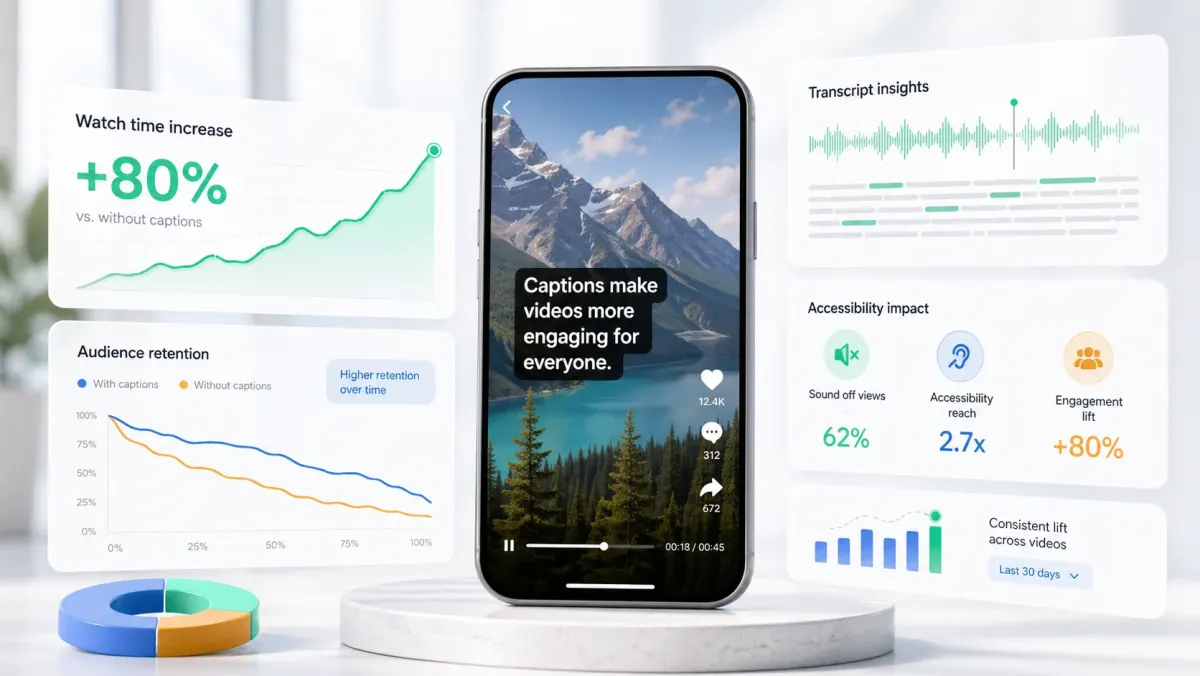
To transcribe a Zoom meeting, record the meeting, download the audio or video file, run it through a transcription tool, review speaker names and technical terms, then export the transcript in the format your team needs. For sales calls, webinars, interviews, and internal training, the transcript is only the first asset. The real value is turning it into decisions, notes, clips, and reusable knowledge.
A good B2B transcription workflow should answer four questions: What was said? Who said it? What decisions were made? What should happen next? If the transcript does not help the team act, it is just a long text file.
Step 1: record with transcription in mind
- Ask participants to use microphones when possible.
- Reduce background noise and overlapping speech.
- Start with names and roles if the meeting has external guests.
- Record the final meeting, not a partial screen capture.
- Get consent where required by law, company policy, or customer agreement.
Step 2: export the right file
If you only need a transcript, audio is usually enough and uploads faster. If you want clips later, keep the video recording too. For webinars, customer interviews, product demos, and sales calls, video is valuable because facial expressions, screen shares, and product moments help you decide what to clip.
Step 3: generate and clean the transcript
Run the file through a transcription tool, then proofread the parts that matter. You do not need to perfect every filler word for an internal transcript, but you should correct names, company names, product terms, prices, dates, technical language, and decisions. Those are the pieces people search for later.
- Mark decisions clearly.
- Extract action items with owners and dates.
- Add speaker names where the model is uncertain.
- Remove repeated false starts if the transcript will be shared externally.
- Keep the raw transcript if legal or customer-success teams may need it.
Step 4: turn transcript into business assets
The transcript can become a meeting summary, CRM note, onboarding article, sales objection library, customer quote bank, support documentation, webinar recap, or short social clip. This is where teams get leverage. One meeting can produce internal knowledge and external content if the recording is organized.
- 01Summarize the meeting in five bullets.
- 02List decisions and unresolved questions.
- 03Extract customer language worth reusing.
- 04Find 2-5 moments that could become clips.
- 05Caption those clips before sharing internally or externally.
Where SoCaptions fits
SoCaptions is useful when a Zoom meeting contains moments worth sharing as video. Upload the clipped segment, generate captions, clean the transcript, choose a readable style, and export a captioned MP4. That works well for webinar highlights, customer testimonials, founder updates, product walkthroughs, and internal training clips.
Do not publish a raw Zoom clip with tiny screen text and no captions. Crop to the speaker or product moment, caption it, and make the takeaway obvious in the first three seconds.
Transcription checklist
- Consent handled.
- Recording downloaded.
- Transcript generated.
- Names and terms corrected.
- Summary and action items extracted.
- Useful clips captioned and exported.
Production workflow
The practical way to apply this guide is to treat how to transcribe a zoom meeting as a repeatable production workflow, not a one-off fix. Start with the final video file, not the rough edit. Make the content understandable first, make the captions accurate second, and make the styling attractive third. That order prevents the most common mistake in video caption work: spending time on color, animation, or font choice before the words, timing, and placement are correct.
For short-form video, the workflow should be fast enough that you can use it every time you publish. If the process takes 45 minutes per clip, you will skip it when you are busy. A good caption workflow should fit inside the final polish pass: upload the final cut, generate captions, fix the transcript, choose the preset, check safe zones, preview on mute, and export. That is enough for most creator, founder, marketer, and agency clips.
- 01Watch the video once without captions and write the single idea the viewer must understand.
- 02Generate or paste the transcript and remove anything that distracts from that idea.
- 03Set caption timing before styling. Timing problems are more damaging than font problems.
- 04Choose one readable visual system: outline, box, karaoke, cinematic, or minimal.
- 05Check the worst frame in the video, not the cleanest frame.
- 06Preview the export at phone size with sound off.
- 07Publish only when the message is clear without audio.
Quality checklist before publishing
Use this checklist before publishing any video related to how to transcribe a zoom meeting. It is intentionally practical. The goal is not to create a perfect studio deliverable; the goal is to avoid the errors that cause people to swipe, misunderstand the message, or miss the call to action.
- The first caption appears early enough to support the hook.
- No caption is hidden by platform buttons, username text, captions, CTA buttons, or progress controls.
- Every important proper noun, number, price, URL, and product name is spelled correctly.
- Lines break around phrases instead of splitting random words.
- The caption block uses enough contrast on the brightest frame.
- The style matches the content category: louder for fast social, cleaner for tutorials, calmer for B2B.
- The video still makes sense with sound off.
- The export was checked after rendering, not only inside the editor preview.
- The caption position is consistent with other videos on the same channel.
- The final CTA is visible, readable, and not competing with native platform UI.
Common mistakes to avoid
The biggest mistake is treating captions as decoration. Captions are part of the content layer. They carry meaning, pace, emphasis, accessibility, and retention. If they are late, too small, hidden, or hard to read, the viewer does not experience them as a design flaw; they experience the whole video as harder to watch.
The second mistake is designing for the editor canvas instead of the feed. Editors show a clean preview. Social platforms add buttons, labels, captions, comments, compression, and device variation. Always assume the published version will be harsher than the preview. More margin, stronger contrast, and shorter lines are usually better than a layout that looks elegant only in the editor.
- Do not put the most important text at the very bottom of vertical video.
- Do not use thin fonts for fast speech or small mobile viewing.
- Do not rely on color alone for emphasis if contrast is weak.
- Do not generate captions before the edit is final unless you expect to redo timing.
- Do not export once and assume every platform will display the file the same way.
How to use SoCaptions for this
SoCaptions is built for the practical version of this workflow: quick caption generation, editable transcript cleanup, readable presets, and export-ready MP4 captions for social video. Use it when the edit is mostly done and the remaining job is to make the words visible, timed, and polished. That is where a focused caption tool is faster than opening a full video editor and rebuilding a caption system from scratch.
The best SoCaptions workflow is simple. Upload the final video, generate captions, fix the transcript, pick a preset, adjust placement for the platform, preview the full clip, and export. For high-volume creators, save a consistent style and reuse it. Consistency matters because viewers learn where to read your captions and begin to recognize your videos before they consciously notice the branding.
Try the workflow on a real 20-40 second clip before changing your whole process. One finished export will tell you whether the caption style, placement, and timing are strong enough for your channel.
FAQ
What is the fastest way to handle how to transcribe a zoom meeting?
The fastest reliable method is to work from the final video, use an automatic caption or transcript tool, fix only the meaningful mistakes, and apply a proven preset instead of designing from zero. Manual control is useful, but manual setup is expensive if you repeat it for every clip. Use automation for the repetitive timing work and spend your attention on clarity, placement, and final review.
Should I use burned-in captions or a caption file?
Use burned-in captions when you need every viewer to see the text immediately in a social feed. Use a caption file such as SRT or VTT when accessibility, toggling, translation, or platform-native playback matters. For important videos, the strongest workflow is often both: a captioned social export for reach and a clean transcript or caption file for accessibility and reuse.
How do I know if the captions are readable enough?
Preview the video on a phone-sized screen with sound off. If you can understand the point without leaning in, pausing, or replaying, the captions are probably readable. Then check the brightest frame, the busiest frame, and the final export after compression. Readability is proven in the worst viewing condition, not the best screenshot.
How much should I customize the style?
Customize enough to fit your brand, but not so much that the captions become harder to read. Most channels need one dependable default and one alternate style for special clips. Constantly changing fonts, colors, and animation makes the content feel less consistent and slows production. A simple repeatable style usually beats a new design for every post.
What should I measure after publishing?
Measure retention, average watch time, completion rate, rewatches, comments that mention clarity, and whether viewers understand the call to action. View count alone is too noisy. If caption improvements work, you should see fewer early drop-offs and better comprehension on clips where the spoken message matters.
